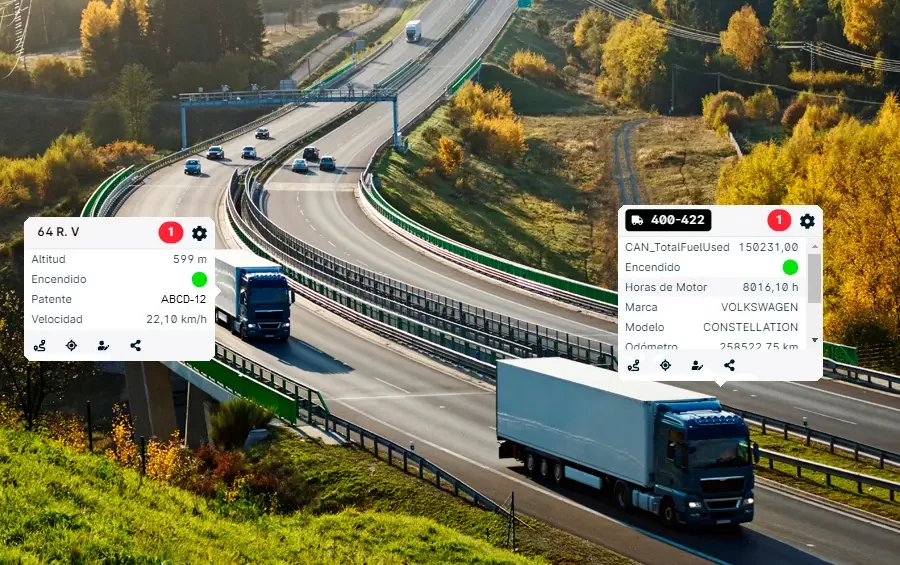
The rollout of advanced fleet tracking solutions in Chile has evolved from simple geolocation into a full operational intelligence infrastructure. As of the first quarter of 2026, companies that have integrated real-time traceability systems report an 18% improvement in fuel efficiency and a 25% reduction in preventive maintenance costs. These figures are not isolated; they reflect the transportation sector’s ability to sustain operational continuity amid rising logistics costs and increasingly strict safety requirements.
Across Chile’s territory, where geography imposes unique challenges for distribution, full asset visibility is the only path to effective risk mitigation. High-end hardware such as the FM6510 captures telemetry bursts that go far beyond location, including critical engine parameters, fuel levels, and vehicle inertial behavior.
Alert management and on-road emergency protocols
The technical authority of a tracking system doesn’t lie in data accumulation, but in actionable alert management. Integrating in-cab technologies such as a Driver Monitoring System (DMS) makes it possible to identify distraction or fatigue events within milliseconds, automatically triggering on-road emergency protocols. According to industry statistics, early intervention from a 24/7 monitoring center reduces the probability of rear-end collisions on intercity routes by 40%.
This responsiveness translates into specific, consolidated reports that clients can audit to optimize their distribution logistics. This isn’t generic data syncing — it’s a technical tool that allows operations managers to identify bottlenecks in loading and unloading times, ensuring every asset meets its schedule without compromising driver safety or cargo integrity.
Mining compliance and road safety
For fleets operating in demanding mine sites, tracking is a mining compliance requirement. Current standards call for absolute precision in traceability, especially in hard-to-reach areas where robust connectivity is essential. Continuous monitoring helps ensure maximum speed limits and exclusion zones are strictly respected, avoiding penalties and operational shutdowns that can cost thousands of dollars per hour.
In conclusion, fleet tracking in Chile is now the baseline standard for any operation seeking competitiveness and resilience. By combining large-scale data analysis with active surveillance, organizations not only protect their assets but also build a culture of road safety grounded in technical evidence and measurable results.